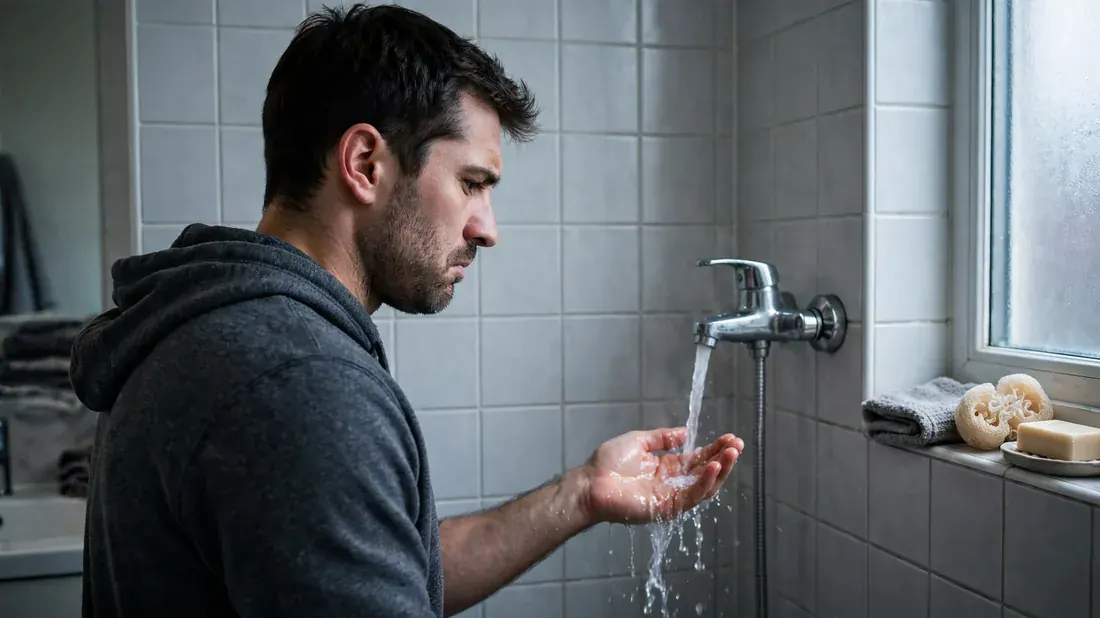
It rarely fails all at once. First the second shower runs lukewarm. Then the first one has a time limit. Then somebody is standing in a cold shower wondering when the water heater became the enemy — and the honest answer is that the decline had causes, probably more than one, and most of them were visible months earlier.
This is the most common water-heater complaint in central Ohio homes, and it has a short list of explanations. This guide walks through each one — what it feels like from the shower, what is physically happening inside the tank, and how the fix differs. By the end you should know which problem you most likely own, and what a plumber will check to confirm it.
Start with the physics: a tank is a bucket with a refill rate
A storage water heater does not make hot water on demand. It keeps a bucket of it — 40 or 50 gallons, typically — heated and waiting. While you shower, cold water enters the bottom of the tank to replace what leaves from the top, and the burner or elements work to heat the incoming water. Two numbers decide your shower: how much fully hot water the bucket holds (its capacity), and how fast it can recover what you have used (its recovery rate).
The figure that combines them is the first-hour rating: how many gallons of hot water the unit can deliver in its busiest hour, starting full. A household's real question is never the tank size on the label — it is whether the first-hour rating covers the home's actual peak: two showers, a tub, the dishwasher and a load of laundry overlapping on a weekday morning.
Running out fast, then, means one of three things: the bucket got smaller, the refill got slower, or the household's peak got bigger. Every cause on the list that follows is one of those three, wearing a disguise.
Sediment: the shrinking bucket
Central Ohio water carries minerals, and a water heater is where they settle. Calcium and magnesium fall out of heated water and accumulate on the tank floor as sediment — a layer that grows year by year in any tank that is never flushed. That layer does two kinds of damage at once.
First, it takes up room. A tank with several inches of sediment at the bottom is a smaller bucket than its label says — sometimes dramatically smaller. Second, it insulates. In a gas heater, the burner fires through the tank floor; sediment between flame and water forces the burner to run longer, overheats the tank floor (the popping and rumbling sounds owners report are steam pockets bursting through the sediment), and cooks the tank's lining. In an electric heater, sediment buries the lower element, which then overheats and burns out — which is why this cause often arrives holding hands with the heating-side failures below.
The signature from the shower: a gradual decline over months and years, in a heater that is not new, often with rumbling sounds during heating cycles. The remedy starts with a flush — drain the tank and clear the sediment — and an honest look at the anode rod, the sacrificial rod that protects the tank from corrosion and is usually consumed by the same age. Flushing restores capacity the sediment stole; it cannot restore lining the sediment already destroyed, which is part of the repair-versus-replace judgment at the end of this guide.
The dip tube: the quiet saboteur
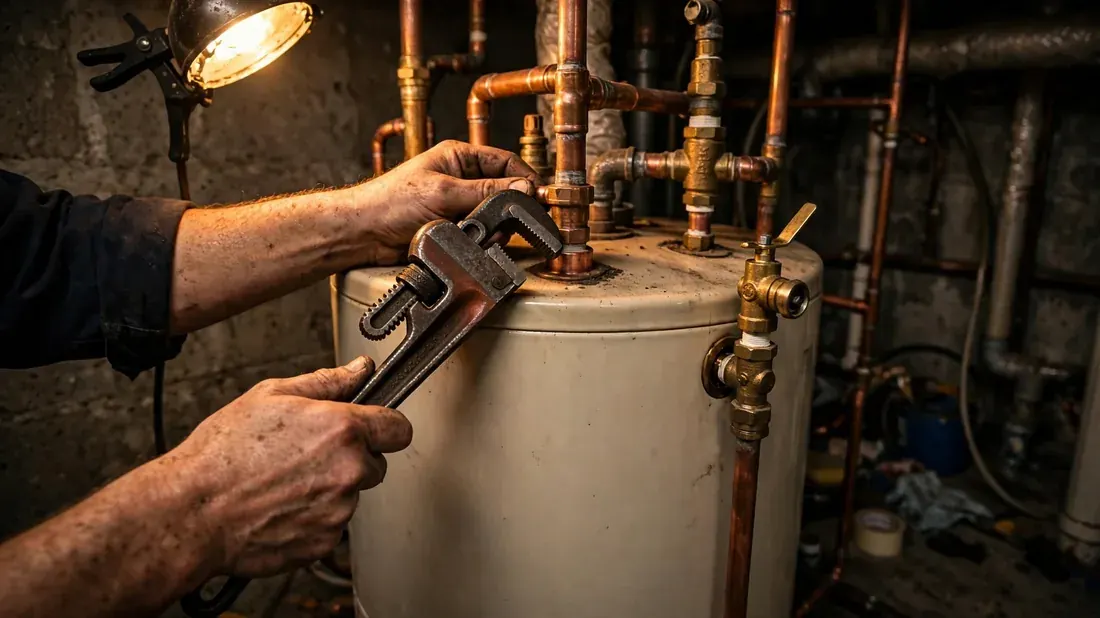
Inside every tank, cold water enters through a long plastic tube — the dip tube — that carries it to the bottom of the tank, so the hot water at the top leaves first, undisturbed. It is a simple, invisible part, and when it cracks or breaks off short, the heater's behavior changes in a very specific way.
Incoming cold water now dumps at the top of the tank, right where the hot water is leaving. It mixes immediately, so the water reaching your shower is diluted — lukewarm far sooner than the tank's true contents justify. The burner and elements are fine; the tank is full of properly hot water at the bottom; the delivery is sabotaged at the top.
The signature: a sudden change, not a gradual one — a heater that was fine last month now gives one short hot shower — in a unit that is otherwise healthy and not especially old. Sometimes there is a second clue: small white plastic fragments appearing in faucet aerators, pieces of the disintegrating tube. Dip-tube replacement is one of the genuinely satisfying repairs in plumbing: a modest part, a definitive symptom, and a full restoration when the diagnosis is right.
Your household outgrew the tank
The third disguise is not a failure at all. The heater may be performing exactly to its specification — a specification chosen for a different household. Tanks get sized at installation, often by the builder, for the family that was expected. Then the family changes: babies become teenagers (the single most reliable way to double a home's hot-water peak), a parent moves in, a soaking tub gets added in a remodel, guests become long-term.
The signature is timing, not decline. Solo showers are fine, at any hour. The failure only happens in the overlap — the morning stack of showers, the tub filled while the dishwasher runs, laundry started mid-shower. And it does not get worse month by month the way sediment does; it simply never fits, and it never did since the household changed.
The remedies are capacity remedies, chosen from the household's real peak pattern: a larger tank, a faster-recovery model, or a tankless unit sized to the home's simultaneous flow — with the honest caveat that undersized is undersized in any technology. A plumber who asks how many people shower between 6 and 8 AM is sizing correctly; one who only asks what size you have now is just repeating the original mistake at a higher price.
Heating-side failures: elements, burners and thermostats
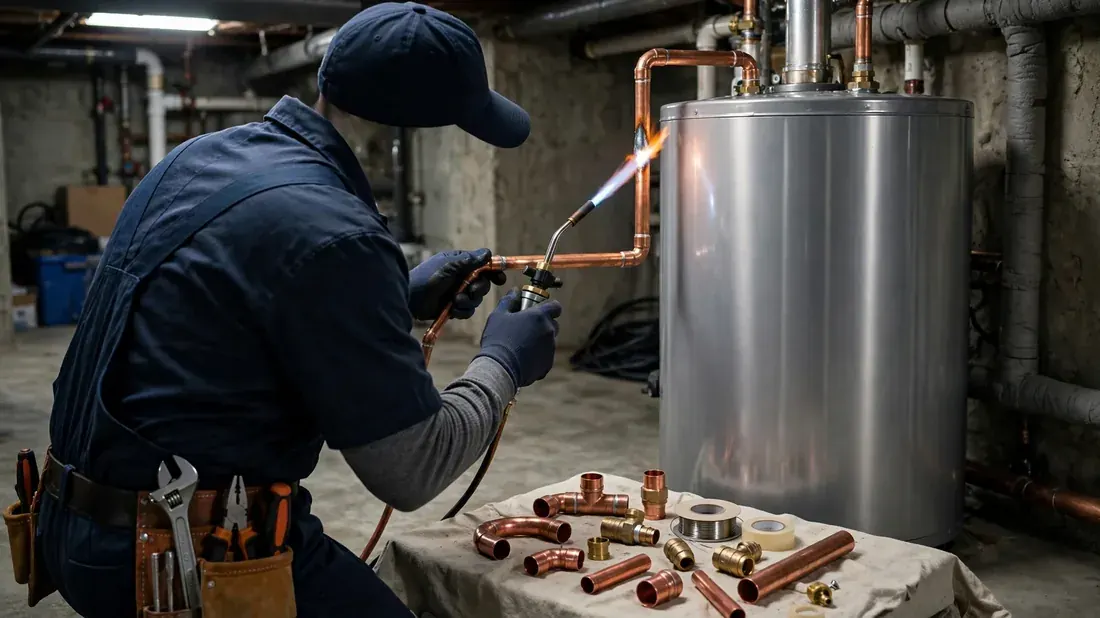
Recovery rate is the other half of the bucket. When the heating side weakens, the tank still starts the morning full and hot — but it refills its heat so slowly that normal use outruns it, and each successive shower starts from a lower floor.
In an electric heater, the usual failure is the lower element: buried in sediment, it burns out, leaving the upper element to heat only the top portion of the tank. The result is a heater with half its recovery and effectively two-thirds of its capacity — hot water that exists, briefly. In a gas heater, look to the burner (a lazy, yellow, or uneven flame heats slowly), the thermocouple and gas control, and the venting. In both types, thermostat trouble — a stat set lower than you think, or failing and reading wrong — produces the same complaint through a simpler cause, which is why checking the setting is a legitimate diagnostic step and not an insult.
The signature: water that starts hot and fades within a single long shower or between closely spaced ones, sometimes with the heater audibly struggling or running near-constantly. The fix is component-level and usually economical — elements, thermostats and burner service are the standard repertoire — provided the tank itself, judged by age and condition, deserves the investment.
Repair, nurse along, or replace: how the call is made
The decision framework is simpler than the sales pressure around it suggests. Age first: a tank heater's typical service life runs about 8 to 12 years, shorter where water is hard and maintenance was skipped — much of central Ohio. Inside the early years, component repairs are usually the proportionate answer. Deep into the second decade, money spent on parts is often money lent to a tank that will repay it briefly.
Condition second: rust at the seams or base, a history of leaks, or a tank floor cooked by years of sediment all argue that the vessel itself is finishing, whatever the elements are doing. Symptom third: dip tubes and elements are repairs; capacity is a sizing decision; sediment on a young tank is a flush and a maintenance schedule.
And maintenance last, because it decides how the story goes next time: an annual flush and an anode rod checked on schedule are the two habits that separate a heater that fades at year six from one still delivering at year twelve. If your current heater is being replaced, those two habits are the simplest upgrade you can buy with it.
Get Help With Plumbing in Columbus & Central Ohio
Guides explain the system; they do not turn a wrench. If this one ends at "this needs a plumber", call the intake line, describe what you found, and get matched with an independent local plumber who serves your city.
📞 Call (610) 992-4884