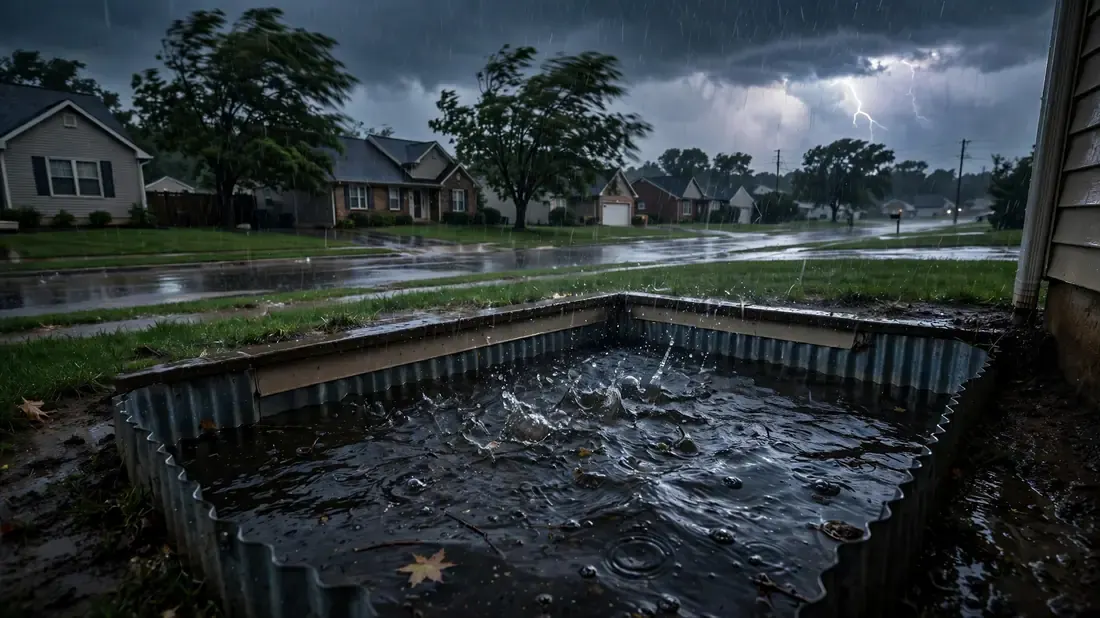
Every plumber in central Ohio knows the call pattern: the hardest rain of the season, the power flickering, and a homeowner watching the sump pit fill toward the rim while the pump sits silent — or worse, runs without moving water. Sump pumps do not fail randomly. They fail under load, which means during storms, which means at the worst possible time by design.
This guide is in two parts: what to do in the moment, while the storm is still happening, and how to make sure the next storm is boring. If you are reading this with water rising, skip to the first section and start there.
In the moment: the first fifteen minutes
Check power before anything else, because storm outages kill more sump protection than failed pumps do. If the house has power but the pump does not run, check the outlet — test it with a lamp or phone charger — and the breaker. A tripped breaker during a storm is common: reset it once. If it trips again immediately, stop; that is an electrical fault, not a nuisance, and the pump stays off until it is assessed.
If the pump hums but does not move water, suspect the float or the discharge. The float switch is the pump's trigger: lift it gently by hand and listen — if the pump starts, the float was stuck against the pit wall or tangled in its own cord, the single most common in-storm failure. If the pump runs but the water level does not fall, the discharge may be blocked or the check valve stuck; you will not fix that mid-storm, which brings you to the water itself.
Fight the water, not the pump. If the pit is overtopping: move everything movable in the basement up and away — boxes off the floor first, then anything fabric or paper. A utility pump, a wet vacuum, or even buckets will not match a storm's inflow, but they buy the margin between damp concrete and ruined belongings while you work. If water is rising across the floor, prioritize by value and vulnerability: electronics and documents first, then furniture legs get lifted onto blocks or cans. And call — a storm night is when the intake line exists. Describe what the pump is doing (silent, humming, running without effect) and what the power is doing; that description shapes the response.
Safety lines that matter more than the basement
Water and electricity negotiate badly. Never stand in standing water to handle plugs, breakers or the pump itself. If the water has reached outlets or the panel area, do not touch electrical equipment at all — move what you can dry-handed from dry ground, and leave the rest.
If the water in the basement is not just stormwater — if it carries the smell or the look of sewage — stop treating it as a cleanup problem. A sewer surcharge through the floor drain means contaminated water; keep children and pets out entirely, avoid contact, and let the response be a professional one. Storms produce both kinds of basement water in central Ohio, sometimes in the same house, and the distinction matters for your health long after the floor is dry.
Finally: gas appliances. If water reaches a furnace or water heater's controls or burner area, do not relight anything. Note it, keep clear of it, and have it assessed before it runs again. Basements dry; the incidents that happen in flooded basements come from the equipment, not the water.
After the storm: read the failure like a report
Once the water is out and the floor is drying — fans running, everything wet lifted to dry — the failure deserves a proper reading, because each cause has a different prevention. Work through the list like a checklist, ideally with the plumber who responds.
Float failure: the switch stuck, tangled or simply worn out — the most common cause and the easiest to prevent with a tested, quality switch or a pump design that protects it. Check valve failure: the discharge water fell back into the pit after every cycle until the pump lost the race. Debris: the pit accumulated silt and grit until the intake choked — a pit is a maintenance item, not a hole you forget. Age and capacity: a pump at the end of its service life, or one that was simply too small for the pit's storm inflow — a capacity failure looks like the pump running constantly and losing ground slowly, which is a sizing answer, not a repair.
Power: if the pump was fine and the electricity was not, the failure is not the pump's at all, and replacing it changes nothing for the next outage. That cause points directly at the next section.
The backup conversation: making the next storm boring
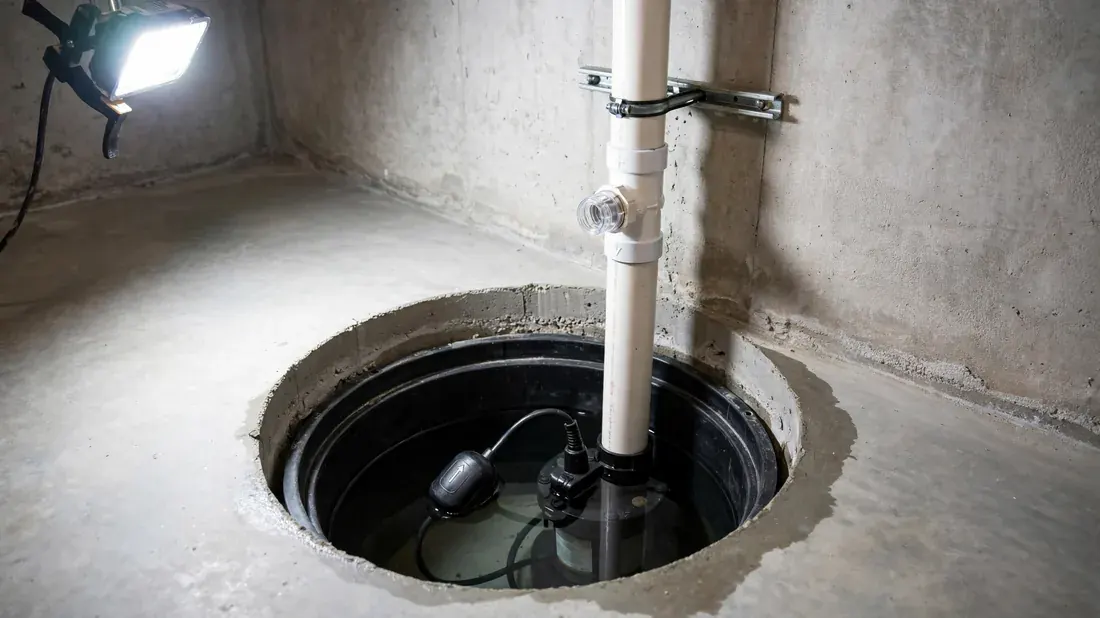
A basement protected by one pump on one power source has one point of failure, and storms attack both halves of it — inflow peaks exactly when outages happen. The standard answer is layered: a battery backup pump that sits in the same pit, on a separate float set slightly higher than the primary's, powered by a maintained battery. When the primary fails, is overwhelmed or loses power, the backup takes over automatically and — with the right setup — sounds an alarm so you know the primary has a problem before the backup's battery becomes the story.
Size the conversation to what the basement holds. A bare concrete utility basement and a finished living level are different risks by an order of magnitude; the finished basement in Grove City, Dublin or Powell, with flooring, drywall and furniture below grade, justifies the full setup almost by arithmetic. Water-powered backup pumps exist as an alternative where municipal water pressure supports them — no battery to maintain, but dependent on city water and less suited to well systems.
Whichever layers you choose, add the alarm. The silent failure is the expensive one: a pump that died in a mild November rain and was discovered in the March storm. An alarm converts a hidden failure into a scheduled repair, which is the entire philosophy of sump protection in one device.
The five-minute test that prevents most of this
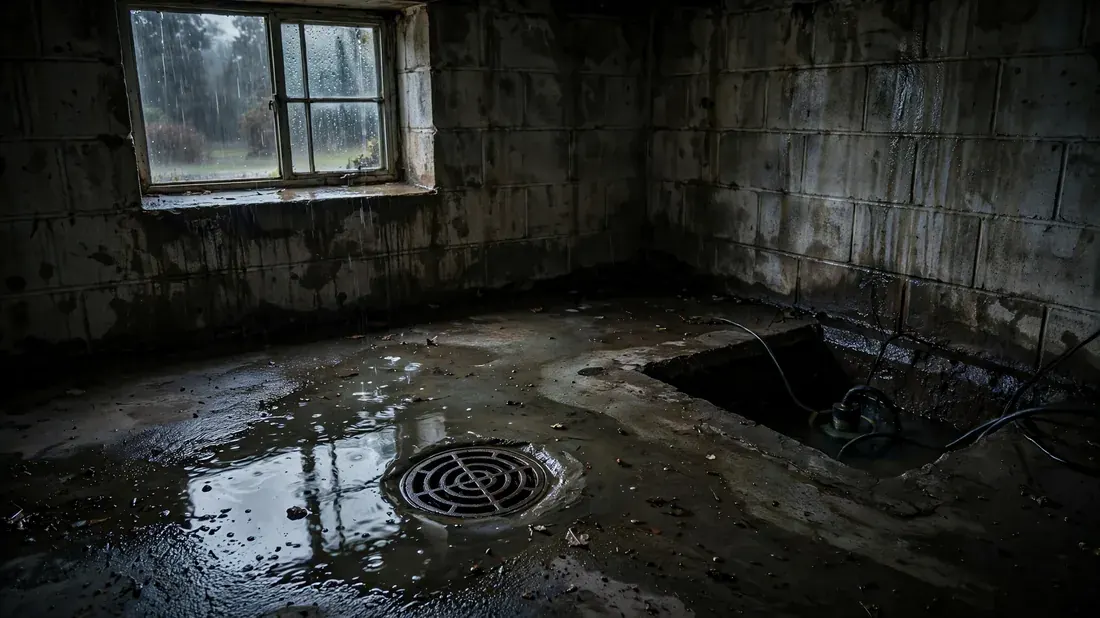
Almost every sump failure described in this guide was detectable in advance with a bucket and five minutes. The test: pour water into the pit slowly until the float rises. The pump should start, empty the pit briskly, and shut off cleanly. Watch for the failures in miniature — a float that hesitates or sticks, a pump that strains or sounds gritty, discharge water that falls back into the pit when the pump stops (a failed check valve), a pit half full of silt.
Run it twice a year: once before the spring rains and once in the autumn, plus after any storm in which the pump ran unusually hard. Test the backup the same way, by unplugging the primary and letting the pit fill to the backup's float. Check the battery's age and terminals while you are there. Five minutes, twice a year, against the alternative of learning the same information at midnight in a storm.
If the test finds something — a sticky float, a weak stream, a noisy bearing — that is a scheduled repair on your own timing, which is the easiest form any plumbing work takes. The homeowners who never have the emergency in this guide's title are not lucky. They are the ones who ran the bucket test.
Get Help With Plumbing in Columbus & Central Ohio
Guides explain the system; they do not turn a wrench. If this one ends at "this needs a plumber", call the intake line, describe what you found, and get matched with an independent local plumber who serves your city.
📞 Call (610) 992-4884