When the problem is not the drain but the sewer line itself — roots through the joints, a section that has bellied or collapsed, clay pipe at the end of its life — cleaning stops being the answer. Columbus Plumbing Help connects you with a local plumber who starts with a camera, shows you the inside of your own line, and scopes the repair to the damage that is actually there.

The sewer lateral is the pipe that carries everything from your house to the city main, and in much of Columbus and its older suburbs it is clay tile or cast iron laid generations ago. Clay joints open as soil settles; roots follow the moisture in. Cast iron scales, rusts and eventually cracks along its bottom. Either way, the pipe fails in patterns a camera can read: root masses at joints, offsets where sections have shifted, bellies where the line sags and holds water, and cracks that leak in both directions.
Columbus's mature tree canopy is part of the story. Clintonville, Worthington, Bexley and the older neighborhoods sit under big oaks and maples whose roots find lateral joints with unerring accuracy. Freeze-and-thaw cycles work the soil; Ohio clay soils swell and shrink with the seasons and shift shallow lines. None of this is exotic — it is the normal old age of buried pipe in this region, and it is diagnosable before a shovel touches the yard.
Repiping belongs in this conversation too. When a home's interior drain or water lines reach the end of their serviceable life — chronic leaks along a galvanized run, drains scaled nearly shut — a full or partial repipe is sometimes the honest recommendation. It is assessed on evidence (camera footage, leak history, pipe condition) rather than sold as a default, and it is scoped section by section: sometimes one failing run, not the whole house.
The footage decides. A single failed joint in an otherwise sound line earns a spot repair. Damage distributed along the run — roots at most joints, offsets in several places, a belly that spans a room's width — makes sectional replacement the honest scope, because three spot repairs in two years cost more than one proper replacement. Depth, soil, surface features (driveways, trees, porches over the line) and the distance to the main all shape the work plan.
Repiping follows the same evidence rule. Interior water or drain lines that leak repeatedly, run discolored, or have scaled down to a fraction of their bore are candidates — assessed run by run. A partial repipe of the failing sections is often the right scope; a full-house repipe is for systems failing everywhere at once. Both conversations start with what can be shown, not what can be sold.
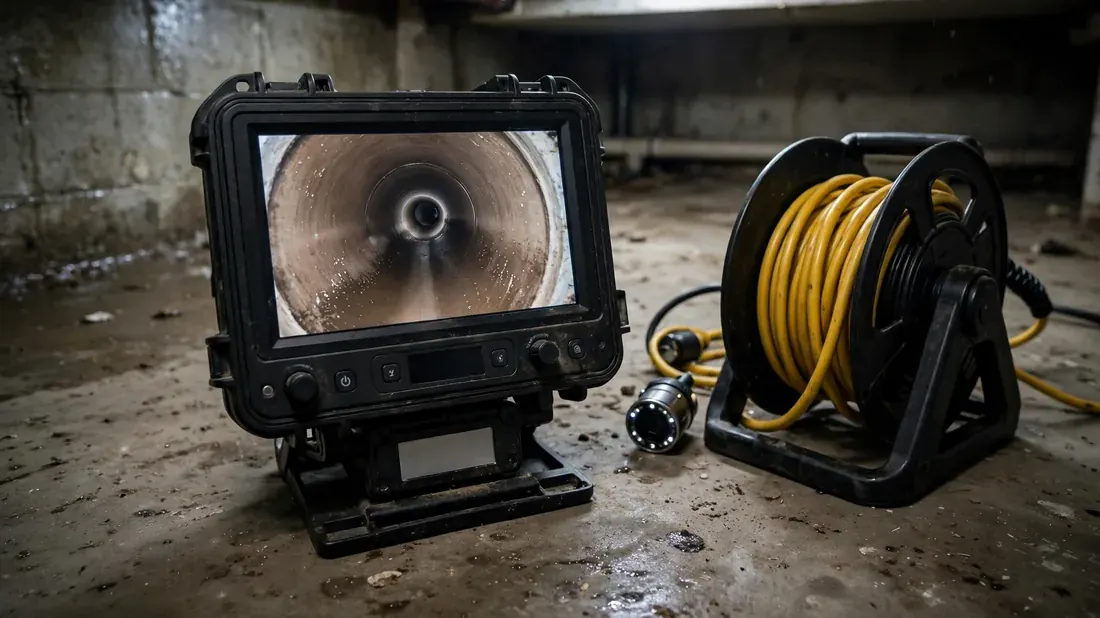
The line is inspected from inside and the defects located by distance and recorded — so the repair is planned from evidence, and you can see what the plumber sees.
One offset joint, one cracked section, one root-damaged fitting: a targeted excavation and replacement of just the failed section, with the rest of the line left in service.
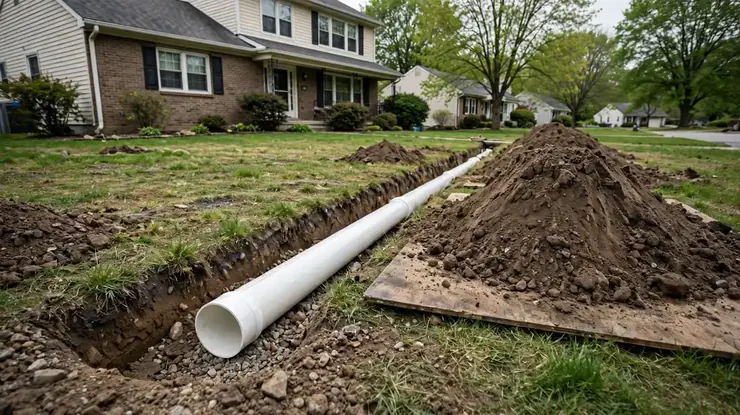
When the camera shows damage along the run — multiple failures, a collapsed section, pipe at end of life — the lateral is replaced from house to main and bedded, sloped and tested properly.
After repair, joints and materials are chosen to resist re-entry, and you get a straight answer on what any remaining older sections will likely do over time.
If interior lines are failing alongside the sewer, a section-by-section repiping scope is laid out — what truly needs replacing and what still has life, decided on condition, not habit.
Trench backfilled and graded, the line tested under full flow from the house's fixtures before the job is called done.
Backups, odors, slow whole-house drainage, prior cleanings that did not hold. The history of the line shapes the diagnosis.
The line is cleaned as needed and inspected; defects are located by distance from the cleanout so excavation, if any, lands in the right spot.
Spot repair versus replacement is decided by what the camera shows, and confirmed with you — including what happens to the yard — before digging.
The failed sections are replaced, slope and bedding set correctly, joints sealed, and connections to house and main made sound.
Every fixture is run, the new line watched at the cleanout, and the work area backfilled and graded to settle.
The camera head carries a transmitter so its position — and the defect's — can be pinpointed at the surface. Digging starts at the right square of yard.
Spot repairs open a working pit at the defect rather than a trench along the whole run, keeping the yard disruption proportional to the damage.
Replacement sections use current materials with sealed joints that resist the root entry and shifting that defeated the old clay and iron.
A sewer line is a gravity machine: correct fall and proper bedding decide whether the new line runs clean for decades or bellies within years.
A clay lateral with roots at every joint, cleaned twice a year, each clearing buying less time than the last.
Camera-mapped repairs at the failed joints with sealed modern fittings, and a line that runs a full year — and counting — without a backup.
A depression forming in the yard where a cracked lateral washed soil into the pipe with every rain.
The cracked section excavated and replaced, the void backfilled and compacted, and the yard holding its grade.
Sewer odor at the floor drain from a bellied section holding waste under the slab's edge.
The sagging run replaced at correct slope, drains flowing silently, and the smell gone at its source.
The situations this service exists for — described the way homeowners describe them on the call.
Cleaning treats a symptom in a broken pipe. Repair treats the pipe. The camera footage tells you which situation you are in.
In older Columbus laterals, roots are a pipe problem with a plant symptom. Sealed replacement joints are how the tenancy ends.
A sewer scope is one of the standard unknowns in older-home transactions; a camera record of the line's condition settles it for either side.
The pattern tells: backups that return within months of a thorough cleaning, multiple drains misbehaving together, sewage odor in the yard, or a camera run showing roots at joints, offsets, a belly or cracks. Cleaning is for blockages in sound pipe; repair is for pipe that is no longer sound. A camera inspection draws the line between them.
The inside of your lateral, live: joint by joint, with distances measured from the entry point. You can see root masses, cracks, standing water in bellies, offsets and the material of the pipe itself. It converts a sales conversation into an evidence conversation.
A spot repair opens a pit at the defect — located by the camera's transmitter — not a trench across the property. Full replacement does open a trench along the run, backfilled and graded at the end. Either way, what will be disturbed is part of the confirmed scope before work starts.
Modern pipe materials carry very long service expectations when bedded and sloped correctly — the installation quality is the variable, which is why slope and bedding are treated as the heart of the job rather than details. The confirmed scope includes how the new line is laid and tested.
When the evidence says the piping system, not one fitting, is the problem: repeated leaks along a galvanized run, chronically low flow from scaled pipes, drain lines corroded through at multiple points. It is scoped by section after inspection — often the worst runs first — rather than assumed to be the whole house.
Burst pipe, sewage backup or water pouring where it should not be? This is the urgent-help service for active plumbing emergencies.
Slow sinks, gurgling tubs and drains that keep clogging. Cabling and cleaning for kitchen, bath and main lines across Columbus.
No hot water, rusty water, rumbling tanks and leaks at the base. Diagnosis and repair for tank water heaters across Columbus.
Old tank at the end of its life? Sizing, placement and installation of replacement tank water heaters, with the old unit removed.
Hot water on demand, no storage tank. Tankless installation and conversion guidance for Columbus homes that fit the pattern.
Water bill up, damp spots, the sound of running water with everything off. Non-invasive leak detection that finds the source before opening walls.
The pump that stands between an Ohio storm and your finished basement. New installations, replacements and battery backup systems.
Gas smells, corroded lines and lines that need moving or extending for an appliance. Careful, pressure-tested gas line work — safety first, always.
High-pressure water scouring for grease-choked kitchen mains and lines a cable cannot truly clean. Jetting restores the pipe's full bore.
Running toilets, weak flushes, leaks at the base and phantom refills. Tank, valve, seal and flange repairs — and honest replacement advice.
One call describes the job once and matches it with an independent local plumber who serves your city.
📞 Call (610) 992-4884Mon–Fri 7 AM–10 PM · Sat 8 AM–10 PM · Sun 7 AM–9 PM ET
One way in: the phone. Call, describe the problem, and the matching starts. That is the whole system — by design.
Tap to call the intake line — one number for all 18 cities.
✉For non-urgent questions about the service.
Mon–Fri 7 AM–10 PM · Sat 8 AM–10 PM · Sun 7 AM–9 PM
Describe the problem once — where it is, what it is doing, when it started — and the intake matches you with an independent local plumber who serves your city.
📞 Call (610) 992-4884 or write to us rankandrent2+plumber-columbus@gmail.com