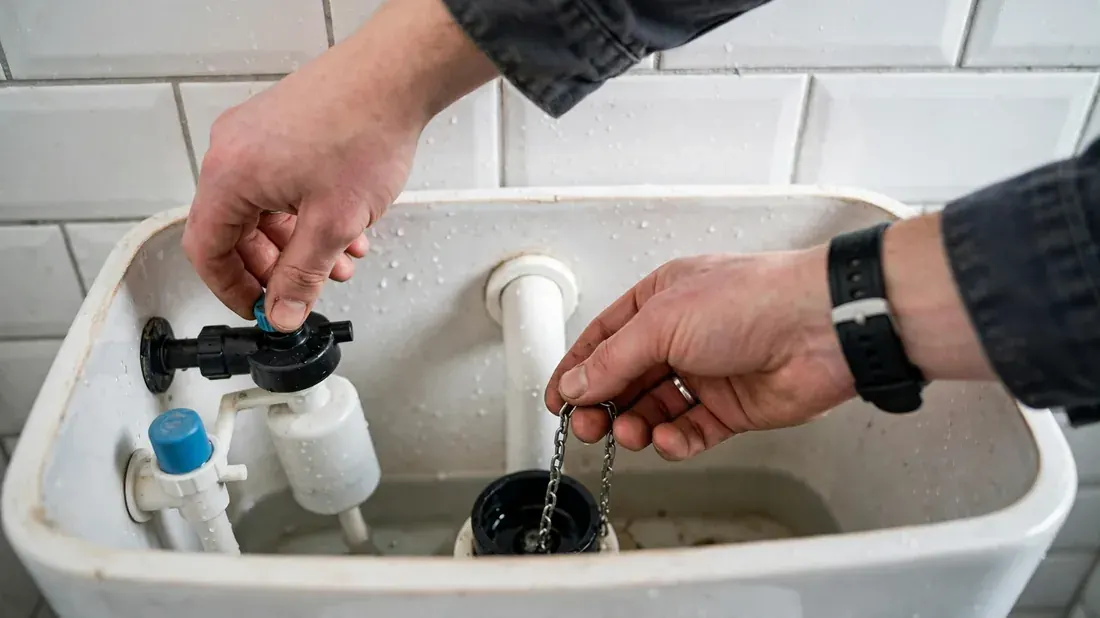
A toilet that runs all night, flushes weakly, leaks at its base or rocks when you sit is not being temperamental — it is reporting a specific failed part. Columbus Plumbing Help connects you with a local plumber who diagnoses toilets at the component level: fill valve, flapper, flush valve, supply line, wax seal or flange, and repairs the part that actually failed.

A toilet is a small system of replaceable parts. The fill valve admits water and shuts off at level; the flapper seals the tank between flushes; the flush valve and its tower set the flush's strength; the wax ring seals the base to the flange; the flange itself anchors everything to the floor and drain. Nearly every toilet complaint maps to one of those components, which is why toilet repair is usually fast, targeted and inexpensive next to most plumbing work — when it is diagnosed at the part level instead of by replacing the whole fixture on suspicion.
The running toilet is the most instructive. A flapper that has gone stiff or warped with age and Columbus's mineral content lets tank water seep into the bowl continuously; the fill valve then refills the tank every few minutes, forever — the phantom flush at 3 AM and a water bill with a leak's signature. A fill valve that will not shut off sends water down the overflow tube instead. Both are part swaps, not mysteries.
Leaks at the base are the ones to respect. Water at the base usually means the wax seal has failed — and a toilet that rocks has usually broken that seal by moving. Ignored, base leaks rot the subfloor around the flange until the repair stops being about the toilet at all. A rocking toilet is therefore a fix-it-now item: re-seat it on a sound flange with a fresh seal before the floor becomes part of the job.
Most toilet work is measured in parts: a flapper is a flapper, a fill valve is a valve. Scope grows when the problem lives below the fixture — a rotted flange, a subfloor softened by a long-ignored seal leak, a supply valve fused with corrosion — or when the toilet itself has cracked porcelain, which no part can fix.
The diagnosis separates those layers before you approve anything, and if the honest answer is a new toilet, you hear it at the diagnosis stage — with the repair-versus-replace reasoning shown, not asserted.
Tank, bowl and base are each tested — dye in the tank to prove a flapper leak, flush volume observed, base and supply checked — so the failed part is named before it is replaced.
Valves that whistle, fill slowly, or never shut off are serviced or replaced and set to the correct water level for the bowl.
Seals, flappers and flush towers replaced with the right size and type for the toilet, ending phantom refills and weak flushes at their source.
Leaking or rocking toilets are lifted, the flange inspected and repaired if needed, and the toilet re-seated on a fresh seal, level and solid.
The braided line and angle stop behind the toilet — the quiet flood risk in every bathroom — replaced when stiff, corroded or ancient.
A toilet with a cracked tank or bowl, or one old enough that parts no longer exist for it, gets a plain replacement recommendation instead of a chain of futile repairs.
Running, leaking, weak, rocking, noisy — the symptom pattern usually names the component before the visit, which speeds everything.
Tank components, flush performance, base seal and supply are each checked so the repair list is evidence, not vibes.
The parts and the work are laid out plainly — toilet repairs are among the most containable scopes in plumbing — and confirmed before tools come out.
Parts are replaced, water level and flush set correctly, the base sealed and the toilet leveled if it was lifted.
Multiple flushes, a dry-base check and a refill watch confirm the toilet works and stays quiet.
Color in the tank water appearing in the bowl without flushing proves a flapper or flush-valve seal leak — the simplest definitive test in the trade.
Flappers, fill valves and flush towers are model-sensitive; the right part for the toilet in front of you is the difference between a repair and a repeat visit.
Damaged or low flanges are rebuilt or reinforced so the new seal seats on something sound — the step that makes a re-seat permanent.
A toilet set dead level on a fresh seal, with shims where the floor asks for them, is a toilet that does not rock its seal apart again.
A tank refilling itself every twenty minutes all night through a mineral-stiffened flapper, the water bill quietly doubling.
Flapper and fill valve replaced and set, the tank holding its level in silence, and the meter agreeing.
A toilet shifting on its base with water staining the grout line after every flush.
Toilet lifted, flange repaired, fresh wax seal fitted, and the fixture solid and dry through a week of testing.
A bowl that swirls and gives up, needing a plunger for ordinary use since the rim jets scaled over.
Flush tower replaced, rim jets cleared of mineral scale, and a full, clean flush on the first try.
The situations this service exists for — described the way homeowners describe them on the call.
A running toilet is a leak with good manners — it can waste more water than a dripping faucet many times over while the house sleeps. Part-level repair ends it.
The wax seal is a small part with a big job. Catching its failure early keeps the subfloor out of the repair entirely.
Guest bathrooms and kids' bathrooms need fixtures that simply work. Diagnosis and the right parts restore that instead of a household plunging ritual.
Tank water is escaping into the bowl, almost always past the flapper or the flush valve seal, and the fill valve refills the tank each time the level drops. Mineral buildup and age stiffen flappers until they no longer seal. It is one of the simplest plumbing problems to fix and one of the easiest to ignore while it quietly wastes water all day.
Most often the wax seal between the toilet and the flange has failed — especially if the toilet rocks at all. It can also be a tank-to-bowl leak or a sweating tank in humid weather. Because a seal leak soaks the subfloor invisibly, it deserves prompt attention rather than a towel strategy.
Low tank water level, a worn flush valve, mineral scale clogging the rim jets and siphon jet, or a partial drain blockage. Columbus's mineral content makes scaled rim jets a common culprit in older toilets. Each cause has its own fix, and the diagnosis checks them in order.
Usually, yes — rocking is a mounting problem, not a porcelain problem. The toilet is lifted, the flange inspected and repaired if it is damaged, and the toilet re-seated on a fresh seal and leveled. The important part is not to just caulk and tighten: a rocking toilet has usually already broken its seal.
Cracked porcelain — tank or bowl — ends the discussion, as does a toilet so old or obscure that its internal parts no longer exist. Heavy staining inside the bowl's trapway that survives cleaning also points to a fixture at the end. In those cases replacement is the honest scope, and you will hear it with the reasons.
Burst pipe, sewage backup or water pouring where it should not be? This is the urgent-help service for active plumbing emergencies.
Slow sinks, gurgling tubs and drains that keep clogging. Cabling and cleaning for kitchen, bath and main lines across Columbus.
No hot water, rusty water, rumbling tanks and leaks at the base. Diagnosis and repair for tank water heaters across Columbus.
Old tank at the end of its life? Sizing, placement and installation of replacement tank water heaters, with the old unit removed.
Hot water on demand, no storage tank. Tankless installation and conversion guidance for Columbus homes that fit the pattern.
Water bill up, damp spots, the sound of running water with everything off. Non-invasive leak detection that finds the source before opening walls.
Backups, root-filled laterals and broken sewer lines. Camera diagnosis first, then repair or replacement scoped to the actual damage.
The pump that stands between an Ohio storm and your finished basement. New installations, replacements and battery backup systems.
Gas smells, corroded lines and lines that need moving or extending for an appliance. Careful, pressure-tested gas line work — safety first, always.
High-pressure water scouring for grease-choked kitchen mains and lines a cable cannot truly clean. Jetting restores the pipe's full bore.
One call describes the job once and matches it with an independent local plumber who serves your city.
📞 Call (610) 992-4884Mon–Fri 7 AM–10 PM · Sat 8 AM–10 PM · Sun 7 AM–9 PM ET
One way in: the phone. Call, describe the problem, and the matching starts. That is the whole system — by design.
Tap to call the intake line — one number for all 18 cities.
✉For non-urgent questions about the service.
Mon–Fri 7 AM–10 PM · Sat 8 AM–10 PM · Sun 7 AM–9 PM
Describe the problem once — where it is, what it is doing, when it started — and the intake matches you with an independent local plumber who serves your city.
📞 Call (610) 992-4884 or write to us rankandrent2+plumber-columbus@gmail.com