✉ rankandrent2+plumber-columbus@gmail.com Mon–Fri: 7 AM–10 PM · Sat: 8 AM–10 PM · Sun: 7 AM–9 PM
Plumbing services

Water Heater Repair in Columbus, OH

The shower runs cold, the tank rumbles like a kettle, or a puddle spreads from the base of the unit. Water heater trouble rarely fixes itself, and the difference between a repair and a replacement comes down to an honest diagnosis. Columbus Plumbing Help connects you with a local plumber who will find the failed part, tell you plainly what shape the tank is in, and repair what is worth repairing.

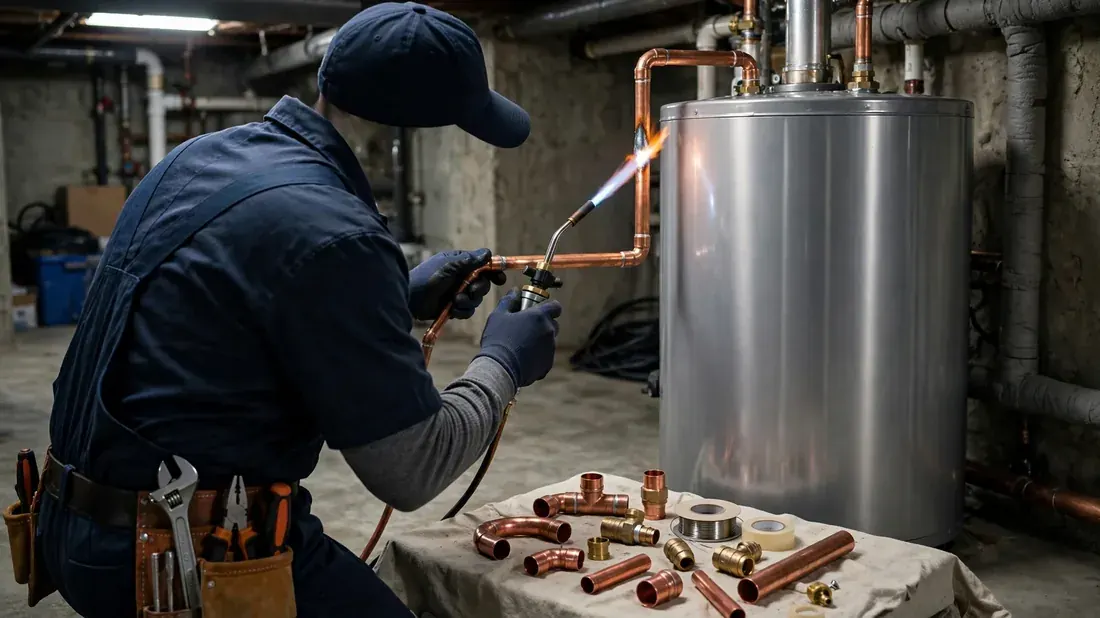
Plumber soldering copper pipe connections above a water heater in a Columbus basement
Understanding

Understanding Water Heater Repair in Columbus, OH

A tank water heater is a simple machine with a handful of parts that wear out: heating elements or a burner, thermostats, the anode rod that sacrifices itself to corrosion, the temperature-and-pressure relief valve, and the tank itself. Columbus water carries minerals that settle as sediment in the bottom of the tank — the source of the rumbling and popping sounds an aging heater makes as water trapped under the sediment layer boils through it.

Symptoms point at parts. No hot water at all usually means a failed element, a tripped control or a burner problem. Lukewarm water that runs out fast suggests one dead element of two, a broken dip tube, or heavy sediment. Rusty hot water — only from the hot side — means the anode rod is spent and the tank is starting to corrode. A leak at the base is the serious one: tanks almost never leak from a fixable fitting at the bottom seam, and that failure is the tank itself.

Age frames every decision. Most tank heaters give somewhere around a decade of service, give or take years either way depending on water and maintenance. A younger unit with a failed element deserves a repair. An older unit leaking at the seam deserves a replacement conversation — and a good plumber will show you the evidence either way instead of selling you the bigger ticket by default.

  • No hot water, or hot water that runs out fast
  • Rumbling, popping or kettling sounds from the tank
  • Rust-colored water from hot taps only
  • Water pooling at the base of the unit
  • Pilot, burner or temperature-control faults
The honest scope

What Decides Whether a Water Heater Is Repaired or Replaced

The tank decides. If the steel tank is intact, almost everything bolted to it — elements, thermostats, burners, valves, anode rods — can be serviced or replaced, and on a younger unit that is the sensible spend. If the tank itself is leaking or deeply corroded, no part replacement changes the outcome, and repair money is better put toward a new unit.

Age and history weigh in second: an older tank on its second or third repair, with heavy sediment and a spent anode, is telling you its remaining life is short. The plumber lays out the evidence — age, tank condition, sediment, part cost against unit condition — and you confirm the direction before anything is ordered or installed.

What's included

What Our Water Heater Repair Service Includes

Full symptom diagnosis

The plumber tests elements, controls and burner operation, checks for sediment load and inspects the tank, valves and connections — so the repair targets the failed part, not a guess.

Heating element and thermostat repair

On electric units, failed elements and thermostats are the most common cause of cold or lukewarm water, and both are straightforward part replacements on a sound tank.

Burner and gas-control service

On gas units, burner assemblies, thermocouples and gas controls are checked and serviced so the heater fires reliably and safely.

Anode rod replacement

The rod that protects the tank from corrosion is a consumable. Replacing a spent rod on a younger tank extends its working life.

Valve and fitting repairs

Dripping relief valves, leaking drain valves and corroded fittings at the top of the tank are repaired or replaced — the leaks that are actually fixable.

An honest repair-or-replace read

If the tank itself is failing, you hear it plainly, with the evidence shown. If it is a part, you hear that too. The decision stays yours.

The process

Our Water Heater Repair Process

Say what the water is doing — cold, lukewarm, rusty, noisy, leaking — and roughly how old the unit is if you know. That shapes the diagnosis before the visit.

Power or gas supply, controls, elements or burner, and the tank's condition are each checked, so the failed component is identified rather than assumed.

The findings are explained with the evidence on the unit itself, and you confirm the direction before any work begins.

Parts are replaced, the tank refilled and heated, and hot water is verified at a tap — including a check that the relief valve and connections are dry.

If sediment is building up, you get the flushing picture for your unit and water, so the same failure does not queue up again.

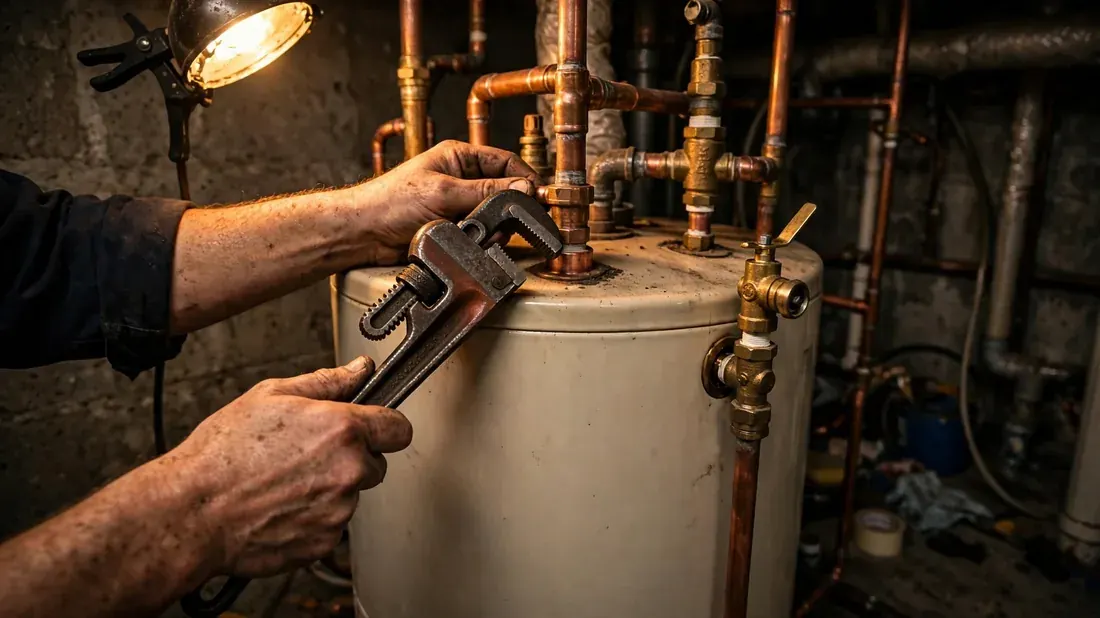
Plumber's hands working on the fittings at the top of a residential water heater tank

Confirmed before work begins

Each step is talked through on the call and confirmed on site by the matched plumber.

Tools & methods

Tools and Methods for Water Heater Repair

Electrical testing equipment

Multimeters and element testers confirm whether an element, thermostat or control has actually failed before it is replaced.

Combustion and gas checks

Gas units are checked for correct burner operation and safe venting — a heater that fires badly is a safety problem, not just a comfort one.

Tank flushing

Draining and flushing clears the sediment layer that causes rumbling, inefficiency and early element failure in Columbus water.

Pressure and temperature checks

System pressure and the relief valve are verified, because excessive pressure quietly shortens the life of every part in the system.

Before and after

Before and After — What Changes

Before

Showers that turn cold in minutes

A two-element tank running on one burnt-out element, reheating too slowly to keep up with a morning of showers.

After

Failed element and its thermostat replaced, tank flushed of sediment, and back-to-back showers staying hot.

Before

A tank that rumbles and pops

Sediment baked onto the tank floor, trapping water that boils through it with every heating cycle.

After

Sediment flushed out, burner and controls checked, and the heater running quietly through a full cycle.

Before

Rusty water from hot taps

A consumed anode rod leaving the steel tank exposed, tinting the hot water and shortening the tank's life.

After

New anode rod fitted to a sound tank, system flushed, and hot water running clear again.

Problems we solve

Problems Solved by Our Water Heater Repair Services

The situations this service exists for — described the way homeowners describe them on the call.

01

Cold or inconsistent hot water

Element, control and burner faults are the everyday causes — diagnosable, and usually repairable on a sound tank.

02

A heater aging before its time

Sediment and a spent anode rod kill tanks early. Servicing both is the maintenance that actually matters for tank life.

03

Leaks around the unit

Some leaks are fittings and valves — fixable. Some are the tank seam — not. Telling them apart quickly is the whole job of the first visit.

Good questions

Water Heater Repair — Frequently Asked Questions

Usually one of three things: a failed lower heating element (electric units heat with two elements, and losing one cuts recovery sharply), a broken dip tube that mixes incoming cold water at the top of the tank, or a thick sediment layer insulating the water from the heat. All three are diagnosable on a visit.

Sediment. Minerals settle and harden on the tank floor; water trapped beneath the layer flashes to steam and pops through it. Flushing the tank clears loose sediment and quiets the unit — and a heater that rumbles is also heating less efficiently and wearing faster.

That pattern points at the water heater itself: the anode rod — the sacrificial rod that corrodes so the tank does not — is used up, and the tank has begun to rust. On a sound, younger tank a new rod and a flush can clear it; on an older tank it is an end-of-life sign.

A leak at the bottom seam is almost always the tank itself failing, which is not a repairable part — the unit needs replacement. Leaks from the top fittings, the drain valve or the relief valve are different and often are fixable. The first visit confirms which kind you have before any money is spent.

Most give roughly a decade of service, with real spread either way depending on water mineral content, usage and whether the anode rod and sediment were ever serviced. A unit that has been flushed and had its rod checked at intervals usually outlasts a neglected one by years.

Keep exploring

Related Services

Emergency Plumber

Burst pipe, sewage backup or water pouring where it should not be? This is the urgent-help service for active plumbing emergencies.

Drain Cleaning

Slow sinks, gurgling tubs and drains that keep clogging. Cabling and cleaning for kitchen, bath and main lines across Columbus.

Water Heater Installation

Old tank at the end of its life? Sizing, placement and installation of replacement tank water heaters, with the old unit removed.

Tankless Water Heater

Hot water on demand, no storage tank. Tankless installation and conversion guidance for Columbus homes that fit the pattern.

Leak Detection

Water bill up, damp spots, the sound of running water with everything off. Non-invasive leak detection that finds the source before opening walls.

Sewer Line Repair

Backups, root-filled laterals and broken sewer lines. Camera diagnosis first, then repair or replacement scoped to the actual damage.

Sump Pump Installation

The pump that stands between an Ohio storm and your finished basement. New installations, replacements and battery backup systems.

Gas Line Repair

Gas smells, corroded lines and lines that need moving or extending for an appliance. Careful, pressure-tested gas line work — safety first, always.

Hydro Jetting

High-pressure water scouring for grease-choked kitchen mains and lines a cable cannot truly clean. Jetting restores the pipe's full bore.

Toilet Repair

Running toilets, weak flushes, leaks at the base and phantom refills. Tank, valve, seal and flange repairs — and honest replacement advice.

One call starts it

Need Water Heater Repair in Central Ohio?

One call describes the job once and matches it with an independent local plumber who serves your city.

📞 Call (610) 992-4884

Mon–Fri 7 AM–10 PM · Sat 8 AM–10 PM · Sun 7 AM–9 PM ET

Get in touch

Call Before the Problem Gets Worse

One way in: the phone. Call, describe the problem, and the matching starts. That is the whole system — by design.

One Call Starts It

Describe the problem once — where it is, what it is doing, when it started — and the intake matches you with an independent local plumber who serves your city.

📞 Call (610) 992-4884 or write to us rankandrent2+plumber-columbus@gmail.com
📞Call now(610) 992-4884