Some leaks announce themselves with a puddle. The expensive ones hide — behind walls, under slabs, inside ceilings — showing up only as a water bill that doubled, a stain that keeps growing, or the faint sound of water when nothing is running. Columbus Plumbing Help connects you with a local plumber equipped to find hidden leaks precisely, so the repair opens the smallest possible area of your home.

Water travels. A leak at a second-floor fitting can stain a first-floor ceiling ten feet away, and a slab leak can surface as a warm spot on a floor in a different room entirely. That is why leak detection is a discipline of its own: the visible symptom is a clue, not a location, and opening the wall where the stain is often means opening the wrong wall.
Columbus homes present the full range of hiding places. Older neighborhoods carry galvanized supply lines that pinhole as they corrode from inside, and cast-iron drains that crack at joints. Slab-on-grade homes — common in parts of Reynoldsburg, Grove City and the postwar suburbs — run supply lines under concrete where a leak can run for months, quietly undermining soil and feeding mold. Copper lines develop pinhole leaks; plastic fittings from certain eras fail at crimps.
The water meter is the first witness. With every fixture off, a moving meter dial (or a leak indicator that will not sit still) confirms water is leaving the system somewhere. From there, the detection work narrows: isolate sections of the house, listen, measure moisture, and pinpoint before anyone cuts.
Scope follows the hiding place. A leak in an exposed basement line is found by eye in minutes. A leak under a slab, behind a tiled shower, or in a yard service line takes the full sequence — isolation, acoustics, mapping — and the repair behind it depends on access: the same failed fitting costs very different effort in an open basement ceiling than under four inches of concrete.
You approve the detection approach and hear the likely repair picture as evidence firms up. Nothing is opened speculatively: the pinpoint comes first, and the opening follows it.
The first step confirms there really is a leak — meter behavior with the house off, and a check that no toilet, irrigation line or appliance is the innocent explanation.
Valves isolate parts of the system — floors, wings, the slab loop, the yard line — so the search area shrinks from the whole house to one run of pipe.
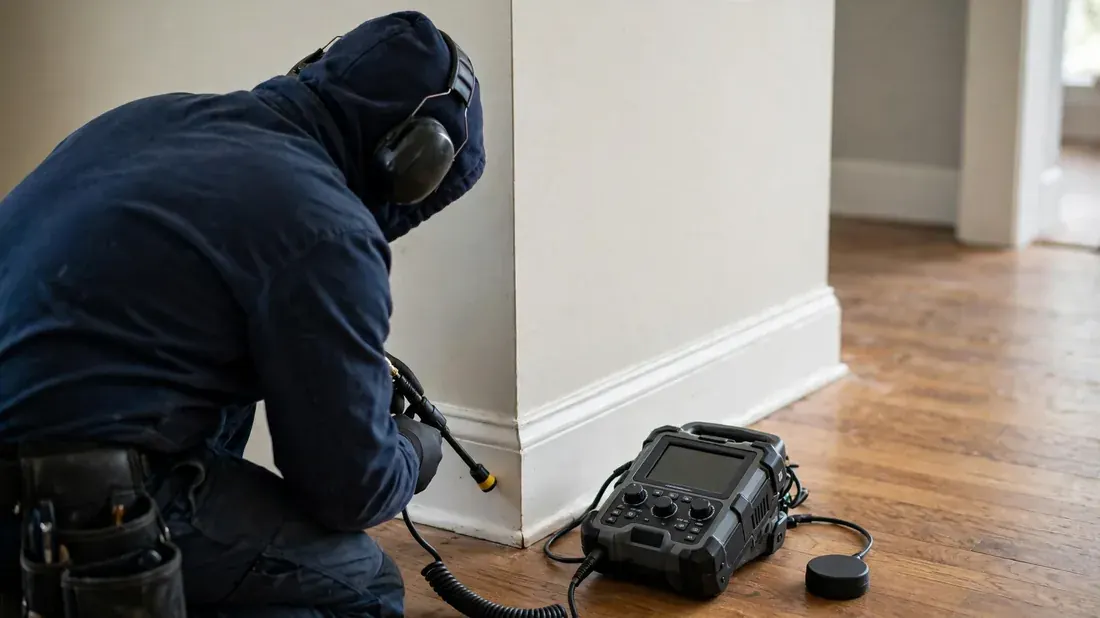
Pressurized leaks make sound. Sensitive listening equipment traces that sound through floors and walls to the leak's neighborhood, then its exact spot.
Moisture meters read walls, floors and ceilings around the symptom area, charting how far water has traveled and confirming the source sits where the evidence converges.
When the suspect line is a drain or sewer rather than a supply line, a camera run shows cracks, offsets and failed joints directly.
Detection ends with a location and a repair scope: which fitting or section failed, what accessing it involves, and what the repair entails — confirmed with you before work begins.
Say what you have noticed — the bill, the stain, the sound, the meter — and how long it has been going on. The clues decide the equipment and the order of the search.
The system is verified to be leaking, then sectioned off so whole parts of the house are ruled in or out at once.
Acoustic gear, moisture readings and — for drains — a camera converge on the source. The goal is a marked spot, not a search area.
With the leak located, the access and repair are explained and confirmed before any opening is made.
The failed section is repaired, the system is repressurized, and the meter and moisture readings confirm the leak is gone.
Ground microphones and listening discs pick up the hiss of a pressurized leak through concrete, drywall and flooring — the core tool for hidden supply leaks.
Pin and pinless meters chart moisture through building materials, separating a leak's source from the area it has merely wetted.
For the unpressurized side of the system, a camera head inspects drain and sewer lines from inside and locates defects by distance.
Section-by-section pressure checks prove which run of pipe cannot hold pressure — hard evidence before any wall or floor is opened.
Usage charges climbing for two cycles with no change in the household, and a meter that creeps with everything off.
A pinhole in a corroded galvanized run behind a bathroom wall, located acoustically, repaired, and the meter sitting still again.
One patch of tile noticeably warm, the classic signature of a hot-water slab leak running beneath.
Leak pinpointed through the slab acoustically, the smallest workable opening made, the section repaired and pressure verified.
A brown ring spreading below an upstairs bathroom, assumed to be the tub — but the tub tested dry.
Moisture mapping and isolation traced it to a supply fitting inside the wall, repaired without touching the tub above.
The situations this service exists for — described the way homeowners describe them on the call.
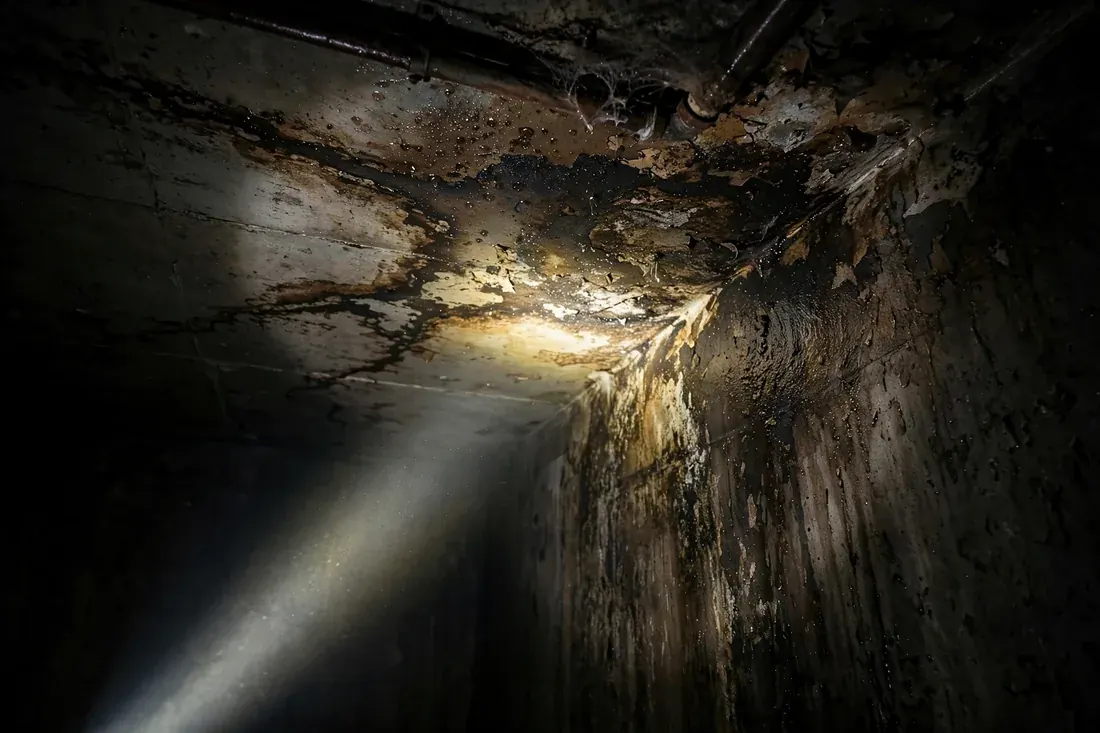
Behind finishes and under concrete, leaks do damage for months. Finding them precisely is what separates a small repair from a renovation.
Mold, rotted subfloor, swollen cabinets — the damage bill of a leak is mostly about time. Early, accurate detection is the easiest part of the whole problem.
Symptoms lie about locations. Detection exists so the first opening in your home is the right one.
Start with the meter: turn off every fixture and appliance that uses water, then watch the meter. If the dial or leak indicator keeps moving, water is going somewhere. Other witnesses: a bill that jumps without a usage change, one warm or damp spot, a musty smell that lives in one room, or the sound of water with the house quiet.
That is what detection prevents. The point of acoustic equipment and moisture mapping is to mark the leak's location before anything is opened, so the repair access is as small as the job allows. Guessing is what tears up houses.
A leak in a water line running beneath a concrete slab floor. Its signs are indirect — a warm spot on the floor (hot line), a damp patch or lifting flooring, a meter that will not stop, sometimes the sound of running water. Slab leaks are located acoustically so the concrete opening, when it comes, is targeted.
Yes, and it is the most common innocent explanation to rule out first: a toilet that silently leaks from tank to bowl can waste a surprising amount of water without a visible symptom. The verification step checks toilets and fixtures before the hidden-leak search begins in earnest.
Yes — drains are not pressurized, so they do not hiss for the acoustic gear. Drain and sewer leaks are found by camera inspection and by the pattern of moisture below them. The call description — supply symptom or drain symptom — decides which toolkit the job is matched with.
Burst pipe, sewage backup or water pouring where it should not be? This is the urgent-help service for active plumbing emergencies.
Slow sinks, gurgling tubs and drains that keep clogging. Cabling and cleaning for kitchen, bath and main lines across Columbus.
No hot water, rusty water, rumbling tanks and leaks at the base. Diagnosis and repair for tank water heaters across Columbus.
Old tank at the end of its life? Sizing, placement and installation of replacement tank water heaters, with the old unit removed.
Hot water on demand, no storage tank. Tankless installation and conversion guidance for Columbus homes that fit the pattern.
Backups, root-filled laterals and broken sewer lines. Camera diagnosis first, then repair or replacement scoped to the actual damage.
The pump that stands between an Ohio storm and your finished basement. New installations, replacements and battery backup systems.
Gas smells, corroded lines and lines that need moving or extending for an appliance. Careful, pressure-tested gas line work — safety first, always.
High-pressure water scouring for grease-choked kitchen mains and lines a cable cannot truly clean. Jetting restores the pipe's full bore.
Running toilets, weak flushes, leaks at the base and phantom refills. Tank, valve, seal and flange repairs — and honest replacement advice.
One call describes the job once and matches it with an independent local plumber who serves your city.
📞 Call (610) 992-4884Mon–Fri 7 AM–10 PM · Sat 8 AM–10 PM · Sun 7 AM–9 PM ET
One way in: the phone. Call, describe the problem, and the matching starts. That is the whole system — by design.
Tap to call the intake line — one number for all 18 cities.
✉For non-urgent questions about the service.
Mon–Fri 7 AM–10 PM · Sat 8 AM–10 PM · Sun 7 AM–9 PM
Describe the problem once — where it is, what it is doing, when it started — and the intake matches you with an independent local plumber who serves your city.
📞 Call (610) 992-4884 or write to us rankandrent2+plumber-columbus@gmail.com