A drain rarely fails all at once. It slows, it gurgles, it needs plunging more often — then one day it simply stops. Columbus Plumbing Help connects homeowners across Columbus and central Ohio with local plumbers who clean drains properly: the right machine for the line, a check of what caused the blockage, and an honest read on whether the pipe itself is part of the problem.

Every drain in a house is a slope problem. Waste lines are pitched to carry water and solids toward the sewer, and anything that narrows the pipe — grease film, hair, scale, soap curd, tree roots at a joint — slows the flow until material settles and a blockage forms. Kitchen lines clog on grease and food film. Bathroom lines clog on hair and soap. Main lines clog on roots, scale and whatever should never have been flushed.
Central Ohio adds local flavor to the pattern. Older Columbus neighborhoods carry clay and cast-iron sewer laterals that crack, offset and invite roots; big mature street trees in Clintonville, Worthington and the older suburbs send roots straight at those joints. Hard water leaves mineral scale inside older metal drains, narrowing them year by year. A drain that clogs twice in a season is usually telling you the pipe, not the clog, is the story.
That is why real drain cleaning is diagnosis plus clearing. A cable machine restores flow; a camera, when the same line keeps failing, shows why. Guessing at repeat blockages wastes money — the line between a cleaning and a repair is a look inside the pipe.
Scope follows the pipe. A soft blockage in a kitchen branch is a short visit. A root-filled clay lateral that has started to offset at the joints is a longer job — and if the camera shows a collapsed section, cleaning becomes a repair conversation instead. The honest sequence is always the same: clear it, look at it if it keeps failing, then decide.
You confirm the scope before work starts. If a camera inspection is recommended, the plumber explains what it can change about the decision before it happens, so the bill never grows on a surprise.
The plumber starts from the symptom: which fixtures are slow, which gurgle, whether the problem is one drain or the whole house. That pattern points to the branch line or the main before a machine ever comes out.
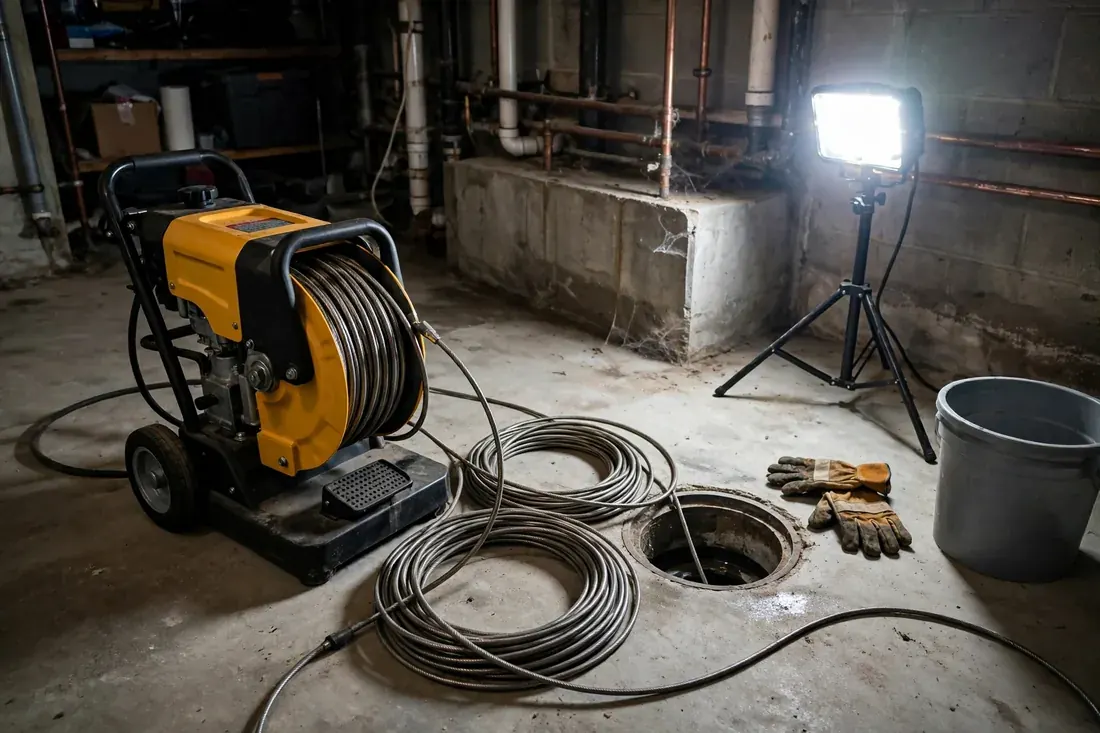
Small branch lines, kitchen runs and the main sewer each take different cable sizes and cutting heads. Using the right one clears the blockage without beating up old pipe.
Where roots have entered a clay or cast-iron lateral, a cutting head clears the growth and restores the full bore of the line as far as the pipe's condition allows.
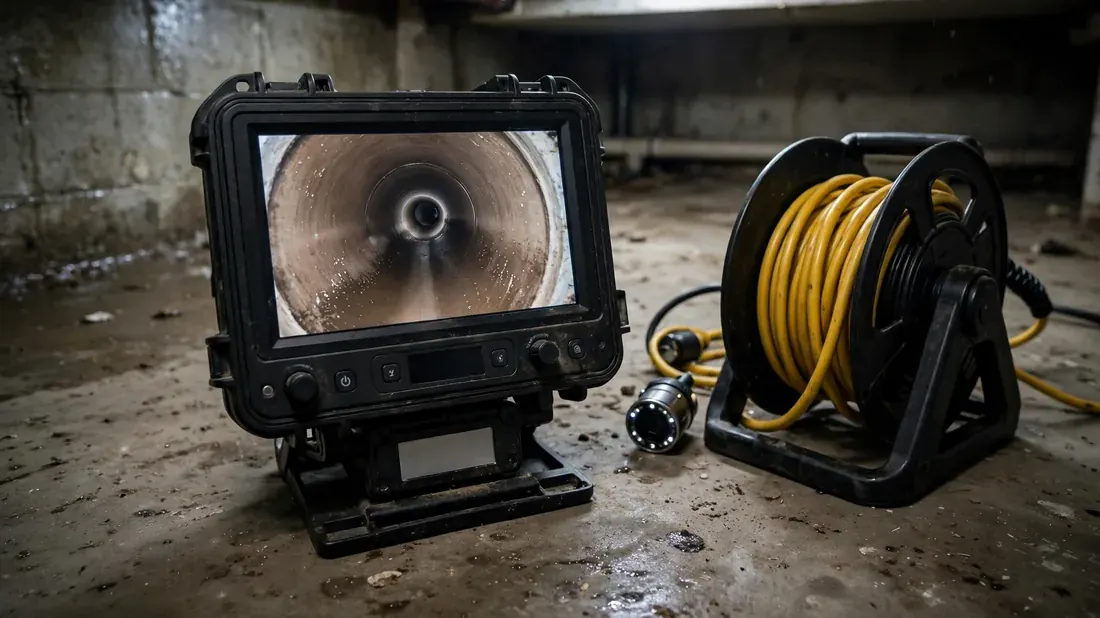
For repeat blockages or older laterals, a camera run shows cracks, offsets, bellies and root joints — the evidence that separates a cleaning bill from a repair decision.
While one line is open, the other fixtures get run and watched. A main-line problem often shows itself in a basement floor drain first.
What goes back into the drain decides how long the cleaning lasts. The plumber leaves you with the specifics for your line — grease habits for kitchens, strainers for tubs, root watch for older laterals.
Say which drains are affected and how they behave — slow, gurgling, backing up, or one fixture only. That pattern is the first diagnostic, and it decides the equipment.
The plumber works from the cleanout or fixture closest to the blockage, protecting floors and finishes around the work area.
A rotating cable with the correct head breaks up the blockage or cuts roots, and the line is flushed to carry the material out to the sewer.
Sinks, tubs and toilets on the line are run hard to confirm the drain takes full flow without rising or gurgling.
If the blockage pattern suggests pipe damage, a camera inspection shows the inside of the line so the next decision is based on evidence.
Drum and sectional machines with interchangeable heads — the workhorse for branch lines and mains, sized to the pipe so old clay and cast iron are cleaned, not damaged.
Serrated heads that shave root masses off pipe walls and joints, restoring flow through older laterals under mature trees.
A lighted camera head on a push rod that records the inside of the line and locates defects by distance — the difference between knowing and guessing.
After clearing, lines are flushed and every connected fixture is run, because a drain that only works at a trickle is not clean.
Standing cloudy water in the basin, a disposal that churns against a grease-narrowed line under the sink.
Line cabled from the cleanout, grease film scoured from the pipe walls, and the sink draining at full speed under a running tap.
Water rising around your ankles, draining slowly overnight through a hair-and-soap blockage below the floor.
Branch line cleared with the right-sized cable, trap and overflow checked, and the tub emptying as fast as the shower fills it.
Water and sewer smell coming up through the floor drain whenever the washing machine empties.
Main line cabled and root-cut, camera run to confirm the pipe, and every fixture in the house draining without a gurgle.
The situations this service exists for — described the way homeowners describe them on the call.
When every fixture is sluggish, the problem is downstream — the main line. Cleaning it restores the whole house at once.
A single sink or tub that keeps clogging usually has a local cause: a grease-heavy kitchen run, a hair-bound bath line, or a trap and vent issue. Cleaning targets that branch.
Gurgling and odor often travel together — partial blockages vent gas back through traps. Clearing the line and checking trap seals ends the smell at its source.
A repeat clog at the same fixture almost always means a pipe condition, not bad luck: a grease-narrowed kitchen line, a rough or scaled cast-iron section that catches debris, a belly where the line sags, or roots entering at a joint. Cleaning clears it; a camera shows which condition you have.
They are hard on older pipe and seals, risky to handle, and they rarely clear a real blockage — they tend to melt a small channel through grease that closes again within weeks. On cast iron and older traps they can do more harm than the clog. Mechanical cleaning removes the material instead of softening it.
The signs point downstream: several fixtures slow at once, gurgling when a toilet flushes or the washer drains, water rising in a tub when a sink empties, or anything coming up through a basement floor drain. One slow sink is a branch problem; a pattern across the house is the main.
A cable machine with a cutting head can clear roots out of a lateral and restore flow — Columbus's older clay lines under mature trees need exactly this. Roots do grow back through the same joints, though, which is why a camera check after clearing matters: it shows whether the joint is merely open or actually broken.
Cooking grease and oil (they set solid in the line), coffee grounds, expanding foods like rice and pasta in quantity, and anything marketed as flushable that is not toilet paper — wipes are the single most common cause of avoidable main-line blockages. Cold water runs with the disposal help move food film along.
Burst pipe, sewage backup or water pouring where it should not be? This is the urgent-help service for active plumbing emergencies.
No hot water, rusty water, rumbling tanks and leaks at the base. Diagnosis and repair for tank water heaters across Columbus.
Old tank at the end of its life? Sizing, placement and installation of replacement tank water heaters, with the old unit removed.
Hot water on demand, no storage tank. Tankless installation and conversion guidance for Columbus homes that fit the pattern.
Water bill up, damp spots, the sound of running water with everything off. Non-invasive leak detection that finds the source before opening walls.
Backups, root-filled laterals and broken sewer lines. Camera diagnosis first, then repair or replacement scoped to the actual damage.
The pump that stands between an Ohio storm and your finished basement. New installations, replacements and battery backup systems.
Gas smells, corroded lines and lines that need moving or extending for an appliance. Careful, pressure-tested gas line work — safety first, always.
High-pressure water scouring for grease-choked kitchen mains and lines a cable cannot truly clean. Jetting restores the pipe's full bore.
Running toilets, weak flushes, leaks at the base and phantom refills. Tank, valve, seal and flange repairs — and honest replacement advice.
One call describes the job once and matches it with an independent local plumber who serves your city.
📞 Call (610) 992-4884Mon–Fri 7 AM–10 PM · Sat 8 AM–10 PM · Sun 7 AM–9 PM ET
One way in: the phone. Call, describe the problem, and the matching starts. That is the whole system — by design.
Tap to call the intake line — one number for all 18 cities.
✉For non-urgent questions about the service.
Mon–Fri 7 AM–10 PM · Sat 8 AM–10 PM · Sun 7 AM–9 PM
Describe the problem once — where it is, what it is doing, when it started — and the intake matches you with an independent local plumber who serves your city.
📞 Call (610) 992-4884 or write to us rankandrent2+plumber-columbus@gmail.com