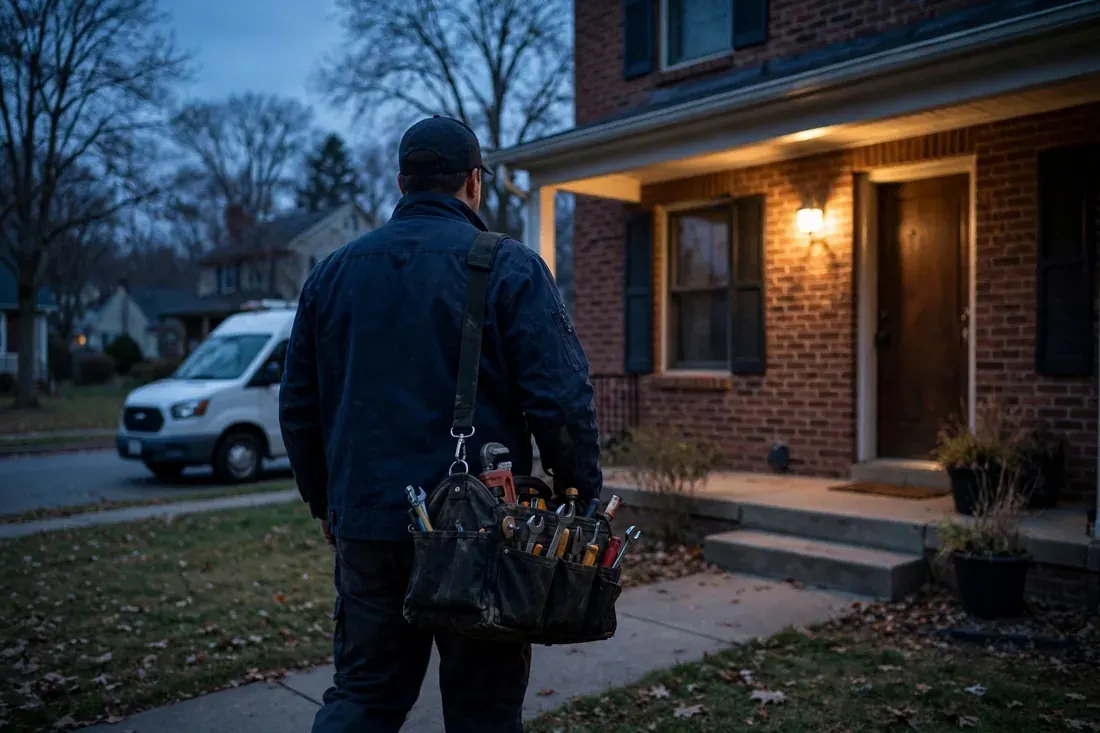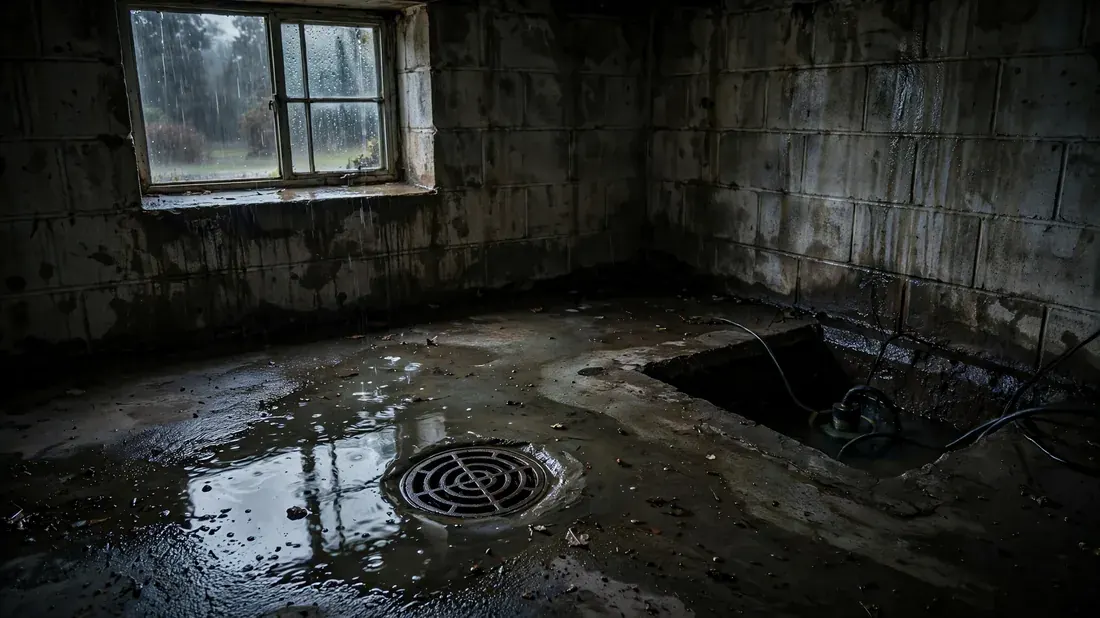
A burst pipe does not wait for a convenient moment, and neither does a sewage backup or a water heater letting go in the basement. Columbus Plumbing Help is the intake line for urgent plumbing problems across Columbus and the surrounding central Ohio communities: one call, a real description of what is happening at your home, and a match with an independent local plumber who handles emergency work.

A plumbing emergency is any failure where water is actively going where it does not belong, or where a drain or sewer problem makes the home hard to live in. In Columbus the repeat offenders are familiar: supply lines that split during a January cold snap, water heaters that fail at the bottom seam and drain their tanks across a basement floor, sewer lines that back up into the lowest fixture after a heavy rain, and washing-machine hoses that let go on an upper floor while nobody is home.
What makes these situations different from a routine repair is the clock. Every minute a pressurized line runs, more water moves into walls, floors and ceilings. The single most useful thing a homeowner can do before any plumber arrives is find the main shut-off valve — usually near the water meter or where the main line enters the basement — and close it. That one action stops the damage clock while the repair clock starts.
Columbus housing stock adds its own wrinkles. Older neighborhoods like German Village, Clintonville and the University District carry older galvanized and cast-iron piping that corrodes from the inside, while newer suburbs carry long runs of plastic supply line and finished basements full of belongings that water reaches fast. The emergency is the same — uncontrolled water — but the layout of the home decides what gets saved first.
Three things decide how big an emergency job gets: how long the water ran before it was shut off, what the water reached, and what failed in the first place. A pinhole in an exposed basement line that was caught in ten minutes is a small job. The same pinhole above a finished ceiling, running for a weekend, is a different project entirely — the plumbing repair is similar, but the drying and restoration around it is not.
The plumber's diagnosis on site settles it. Once the failed part is identified — a fitting, a valve, a section of line, the water heater, the sewer main — the scope is confirmed with you before work proceeds, including whether any part of the job is a temporary control measure with a permanent repair scheduled behind it.
You describe what is happening — where the water is, what you think caused it, whether it is still flowing. That description is what the match is built on, so the plumber who takes the job arrives knowing the situation.
If you cannot find your main shut-off or a fixture valve, the intake walks you through the usual locations for Columbus-area homes so you can stop the water while help is arranged.
The job is matched with an independent local plumber who handles urgent work in your part of the service area — not a general handyman list, a plumbing professional.
The plumber confirms what the job involves and what it will take before any repair begins at your home. Nothing starts on a surprise.
Once the active failure is controlled, the same match can carry the permanent repair — replacing the failed section, not just capping the symptom.
When a sump pump quits or a sewer line backs up mid-storm, the intake separates the immediate hazard from the underlying cause so both get addressed in the right order.
One call is the intake. Say what failed, where the water is going, and whether you have shut the water off. A burst line, a failed water heater and a sewer backup each get matched differently.
If the main valve is still open, close it. This step protects floors, ceilings and belongings more than anything that happens after it, and it takes under a minute in most homes.
We connect the job with an independent plumber who serves your neighborhood and handles emergency calls, and pass along your description so no time is lost re-explaining.
The plumber isolates the failed section — a valve, a line, a fixture or the sewer — and stops the active damage before anything else is discussed.
With the water controlled, the plumber confirms the full scope of the permanent repair with you, then completes it and tests the system under pressure before leaving.
Working isolation valves at the main, the water heater and individual fixtures let a plumber stop one section without draining the whole house.
Emergency work often means cutting out a failed section of copper, galvanized or plastic line and rebuilding it — the truck stock decides how much happens in one visit.
Cabling machines and inspection cameras separate a simple blockage from a broken sewer line, which changes the repair entirely.
When water has already spread, portable pumps and extraction equipment clear standing water so the repair — and the drying — can start.
Water spraying from a split line, soaking insulation and drywall below while the meter spins.
Line isolated and shut down, failed section cut out and replaced, ceiling opened to dry and the system pressure-tested.
Drains gurgling across the house, wastewater rising in the lowest tub whenever water runs upstairs.
Main line cleared and camera-checked, the blockage removed, and every drain in the house flowing and tested again.
A slow rust-colored puddle spreading from the base of the tank across the basement floor.
Tank isolated and drained in a controlled way, the failed unit or fitting replaced, and the area dried and checked.
The situations this service exists for — described the way homeowners describe them on the call.
Ceilings that drip, floors that cup, walls that stain — all of it starts with a failure that keeps running. Stopping the source is the whole first act of an emergency call.
When the main line blocks or collapses, the house's drains reverse. That is a health problem as much as a plumbing one, and it needs clearing and a camera diagnosis, not a plunger.
A failed main line, a frozen section or a broken shut-off can leave a house dry. Restoring supply safely — without bursting a thawing line — is emergency work too.
Anything where water is actively escaping — a burst or leaking supply line, a water heater draining from its base, an overflowing toilet that will not stop — plus sewer backups that push wastewater into the home. Slow drips and weak pressure are urgent repairs, but they are not emergencies in the same sense.
Close the main shut-off valve if water is flowing anywhere it should not. Move belongings, boxes and electronics out of the wet area, put towels at door thresholds to slow the spread, and if the water heater is the source, switch off its power or gas supply as well. Then make the call.
Most often in the basement, on the wall facing the street, near where the main line enters — or beside the water meter. In slab homes it may be in a utility closet or near the water heater. It is worth finding on a calm day rather than during a flood.
Yes — backups are one of the main reasons for urgent calls. Say on the intake that drains are reversing or wastewater is rising in a low fixture, because that changes the equipment the job is matched with: clearing machines and a sewer camera, not just pipe repair stock.
The intake line takes calls Monday to Friday 7 AM to 10 PM, Saturday 8 AM to 10 PM and Sunday 7 AM to 9 PM, Eastern Time. Emergencies that start inside those hours get matched right away; describe the situation fully on the call so the match is right the first time.
Slow sinks, gurgling tubs and drains that keep clogging. Cabling and cleaning for kitchen, bath and main lines across Columbus.
No hot water, rusty water, rumbling tanks and leaks at the base. Diagnosis and repair for tank water heaters across Columbus.
Old tank at the end of its life? Sizing, placement and installation of replacement tank water heaters, with the old unit removed.
Hot water on demand, no storage tank. Tankless installation and conversion guidance for Columbus homes that fit the pattern.
Water bill up, damp spots, the sound of running water with everything off. Non-invasive leak detection that finds the source before opening walls.
Backups, root-filled laterals and broken sewer lines. Camera diagnosis first, then repair or replacement scoped to the actual damage.
The pump that stands between an Ohio storm and your finished basement. New installations, replacements and battery backup systems.
Gas smells, corroded lines and lines that need moving or extending for an appliance. Careful, pressure-tested gas line work — safety first, always.
High-pressure water scouring for grease-choked kitchen mains and lines a cable cannot truly clean. Jetting restores the pipe's full bore.
Running toilets, weak flushes, leaks at the base and phantom refills. Tank, valve, seal and flange repairs — and honest replacement advice.
One call describes the job once and matches it with an independent local plumber who serves your city.
📞 Call (610) 992-4884Mon–Fri 7 AM–10 PM · Sat 8 AM–10 PM · Sun 7 AM–9 PM ET
One way in: the phone. Call, describe the problem, and the matching starts. That is the whole system — by design.
Tap to call the intake line — one number for all 18 cities.
✉For non-urgent questions about the service.
Mon–Fri 7 AM–10 PM · Sat 8 AM–10 PM · Sun 7 AM–9 PM
Describe the problem once — where it is, what it is doing, when it started — and the intake matches you with an independent local plumber who serves your city.
📞 Call (610) 992-4884 or write to us rankandrent2+plumber-columbus@gmail.com