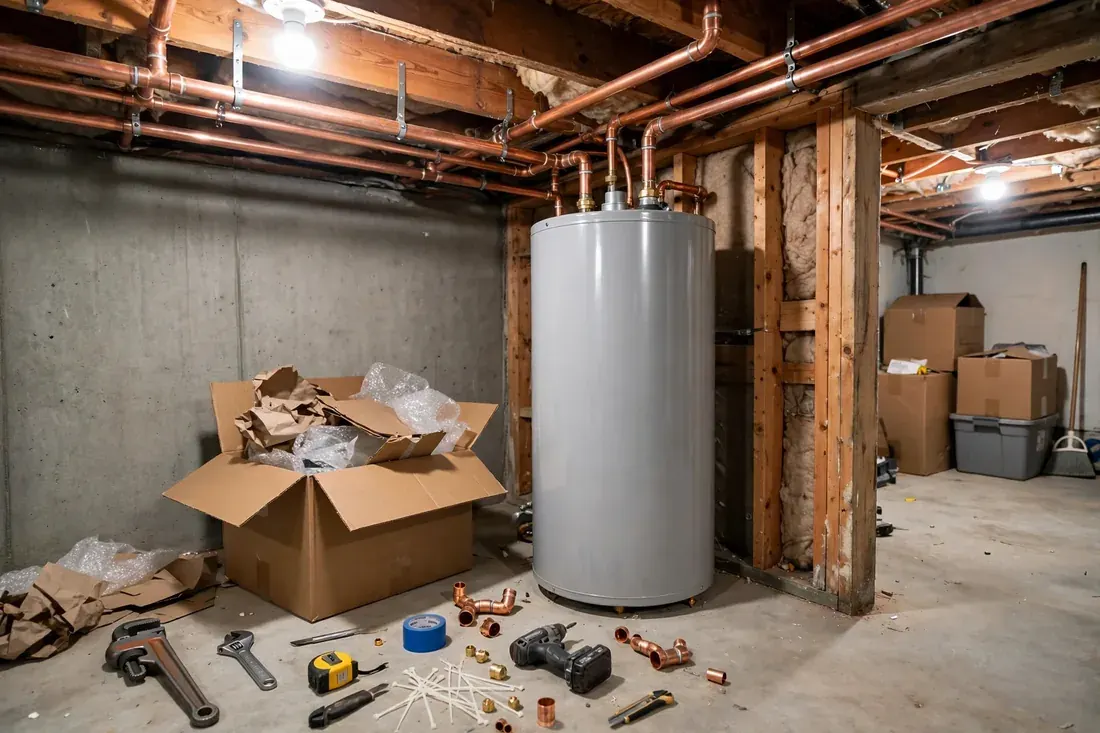
When a tank water heater reaches the end — leaking at the seam, rusting through, or simply costing repair after repair — replacement is the job. Columbus Plumbing Help connects you with a local plumber who sizes the new unit to your household, installs it to code with safe venting and connections, and takes the old tank away. No overselling capacity you do not need, no undersizing that leaves showers cold.

A replacement installation starts with the household, not the shelf. How many people, how many bathrooms, whether showers and laundry stack up in the same hour — that pattern decides tank capacity and recovery rate. Columbus homes range from two-person German Village rowhouses to five-bathroom Dublin and Powell builds, and the right unit for one is wrong for the other. First-hour rating matters more than the gallon number on the label.
Fuel and venting frame the choices. Most Columbus homes run gas or electric tank units; a like-for-like replacement on the same fuel is usually the simplest path. Gas units need correct flue venting and combustion air, electric units need the right circuit capacity, and both need a working temperature-and-pressure relief valve piped to a safe discharge point. Where the old heater sits — basement, garage, utility closet, attic — shapes the drain and pan arrangements that protect the home if the new tank ever leaks.
The installation itself is a half-day of methodical work: drain and remove the old unit, set and level the new one, rebuild water and fuel connections, fill and purge air, set temperature, verify venting and test every safety device. Done properly, it ends with hot water at every tap and a walkthrough of what was fitted and how to shut it down in an emergency.
A like-for-like swap — same fuel, same size class, sound connections — is the simplest version of this job. Scope grows when the new unit needs a different capacity or footprint, when venting must be rebuilt, when the electrical circuit or gas line needs resizing, or when code items like pans, expansion tanks and discharge routing are missing from the old installation and have to be added.
All of that is identified and confirmed with you before installation, from the description of the home and the old unit. If anything unexpected appears once the old tank is out — a corroded shut-off, a damaged flue section — you hear about it and approve it before it is added, not after.
Capacity and recovery are matched to your bathrooms, occupants and usage pattern — including the morning peak — so the new unit fits the house instead of just replacing the old one's label.
The failed tank is drained, disconnected and taken out, including hauling it away. You are not left with a rusting tank in the corner.
Water lines, shut-off valve, fuel connection and — on gas units — the flue are connected or rebuilt as needed, with new fittings where the old ones are corroded.
A new temperature-and-pressure relief valve, discharge piping to a safe point, and where the location calls for it, a drain pan and expansion tank.
Draft and venting are checked once the unit fires, because a water heater that vents badly is a carbon-monoxide hazard, not an appliance.
Temperature setting, shut-off locations and what to watch for in the first days are covered before the plumber leaves.
Say what failed, what fuel the current unit uses, where it sits, and how many bathrooms and people it serves. That is the sizing conversation.
The replacement unit — capacity, fuel, dimensions for the space — and the full scope of the job are confirmed with you before installation day.
The old tank is drained and removed; the new one is positioned, leveled and connected — water, fuel, vent and relief valve.
The tank is filled and purged of air, then fired. Temperature, venting, joints and safety devices are all checked under operation.
You get the shut-off and temperature tour, the old unit is gone, and the work area is left clean.
The measure that counts: how much hot water the unit delivers in its busiest hour, matched against the household's real peak demand.
Gas installations are checked for proper flue draft and combustion air — verified, not assumed.
Closed plumbing systems need thermal expansion handled; an expansion tank and pressure check protect the new unit and the house's fixtures.
Correct unions and fittings between dissimilar metals prevent the galvanic corrosion that eats connections early.
A twelve-year-old heater with a damp base, rust at the seams and a repair history that grows every winter.
A right-sized new unit installed with fresh connections, a tested relief valve and a dry floor under it.
A family added a bathroom in a remodel; the old 40-gallon tank empties halfway through the morning.
Capacity and recovery matched to the real peak, and showers, laundry and dishes no longer queue for hot water.
An older heater in an upstairs utility closet with no pan, its relief valve piped nowhere useful.
New unit set on a drain pan with the relief discharge routed safely, so a future leak announces itself without flooding the floor.
The situations this service exists for — described the way homeowners describe them on the call.
A tank leaking at its seam will not stop. Replacing it on your schedule beats replacing it — and your flooring — on the tank's schedule.
Homes change: kids become teenagers, bathrooms get added. A unit sized for the house as it is now ends the cold-shower rotation.
Older installations sometimes carry venting, valve or connection problems from another era. A replacement is the moment those get put right.
Start with the busiest hour: how many showers, baths, laundry loads and dishwasher runs stack up in the morning peak, and how many bathrooms the house has. That peak demand is matched against a unit's first-hour rating rather than its tank gallons alone. Tell the intake your household size and bathrooms and the sizing conversation starts from your real pattern.
Usually, yes — a like-for-like replacement on the same fuel and venting is the most straightforward installation. The exceptions are when the old unit was undersized for the house, when venting is problematic, or when you are weighing a tankless conversion, which is a different installation covered on its own page.
A straightforward swap is typically a half-day job: drain and remove the old unit, set and connect the new one, fill, fire and test. Installations that add venting work, a pan, an expansion tank or line resizing run longer. The confirmed scope comes with a realistic time picture before the day.
It is drained, disconnected and removed as part of the job, including hauling it away for disposal. Nothing is left for you to drag out of the basement.
120°F is the setting most households land on: hot enough for comfortable showers and effective dishwashing, while limiting scald risk and standby energy loss. The plumber sets it at startup and shows you where the control is if your household prefers it adjusted.
Burst pipe, sewage backup or water pouring where it should not be? This is the urgent-help service for active plumbing emergencies.
Slow sinks, gurgling tubs and drains that keep clogging. Cabling and cleaning for kitchen, bath and main lines across Columbus.
No hot water, rusty water, rumbling tanks and leaks at the base. Diagnosis and repair for tank water heaters across Columbus.
Hot water on demand, no storage tank. Tankless installation and conversion guidance for Columbus homes that fit the pattern.
Water bill up, damp spots, the sound of running water with everything off. Non-invasive leak detection that finds the source before opening walls.
Backups, root-filled laterals and broken sewer lines. Camera diagnosis first, then repair or replacement scoped to the actual damage.
The pump that stands between an Ohio storm and your finished basement. New installations, replacements and battery backup systems.
Gas smells, corroded lines and lines that need moving or extending for an appliance. Careful, pressure-tested gas line work — safety first, always.
High-pressure water scouring for grease-choked kitchen mains and lines a cable cannot truly clean. Jetting restores the pipe's full bore.
Running toilets, weak flushes, leaks at the base and phantom refills. Tank, valve, seal and flange repairs — and honest replacement advice.
One call describes the job once and matches it with an independent local plumber who serves your city.
📞 Call (610) 992-4884Mon–Fri 7 AM–10 PM · Sat 8 AM–10 PM · Sun 7 AM–9 PM ET
One way in: the phone. Call, describe the problem, and the matching starts. That is the whole system — by design.
Tap to call the intake line — one number for all 18 cities.
✉For non-urgent questions about the service.
Mon–Fri 7 AM–10 PM · Sat 8 AM–10 PM · Sun 7 AM–9 PM
Describe the problem once — where it is, what it is doing, when it started — and the intake matches you with an independent local plumber who serves your city.
📞 Call (610) 992-4884 or write to us rankandrent2+plumber-columbus@gmail.com